RSS

Category Archives: Uncategorized

#ala2013 : hash tags and socials

#ala2013 : hash tags and socials

The first day of ALA Annual in Chicago and already the conference is busy and in full swing! Even before it began this year, hash tags on Twitter were flying by with excitement, though not always the “official” ones. It’s always humorous to see the variations on Twitter but we do want consistent use so that everyone can find all the relent Tweets–a priority of mine anyway as a cataloger! Lets agree on metadata, especially for hash tags. Maybe next time ALA can add them to the session info in the book, scheduler, and placard for the rooms…and make the conference one a part of the logo!

Even though it was Friday, the conference had many regular sessions, in addition to the majority of all-day pre-conference events. I was surprised to see the conference center was full and buzzing that morning already.

First up was the Annual Unconference, which was completely packed and standing room only by the time I showed up. Clearly the room was too small and more people showed up than they had expected but the discussion was really fruitful: user expectations versus reality for content, access, and search result; check out history and recommendation systems versus user privacy; circulation and count of items, especially print material; and the role of the library, what it is and should or can be. That’s as much as I caught before heading to the Networking Uncommons to look at the schedule again for the rest of the weekend.

Despite the size of the conference, I always run into friends, co-workers, and librarians that I met at other Annuals and Midwinters. Lunches, dinners, coffee breaks, hallway chats are one of the highlights of these conferences. But then there are the times when I cannot seem to connect with someone due to different schedules. You can’t see everyone, even when you plan to sometimes!

Competencies and education for a career in cataloging IG turned out to be exactly what I tried to find out at MidWinter: how LC conducted their training program internally for RDA. Melanie Polutta works at LC and was an internal trainer, and even an early tester when RDA first came out. She discussed how LC conducted training at the various stages of testing and adoption within LC, the challenges, and some of her lessons learned in hopes that the attending librarians could take away something to help them with training at their own institutions. Most of her advice revolved around understanding the standards and concepts inside and out. That includes terminology, the structure and content of the documentation itself, the theory and purpose, how to apply the standards versus when to use cataloger’s judgment, and deciding what cataloger’s judgment means for local policies. Time and practice are also the obvious other take aways. That and to divorce RDA from MARC when learning and talking about it with others; use publication information instead of referring to the 264 (previously 260) field. Her recommendation was for everyone to learn RDA, and FRBR, at least somewhat since whether you catalog in it or not, there will be hybrid records from here onward along with RDA elements in some AACR2 records.

For the final official ALA event of the day, I attended the Emerging Leaders poster session. One of my friends was a part of this great program this year and so it was exciting to go and hear about her project but also see what everyone else was doing this past year. People are split into various groups surrounding topics of interest and they conduct research and then present their findings at poster sessions. It’s a great way to hone project management skills and develop professional rapport within ALA. The topics vary and this year they included assessing the value of the Emerging Leaders program, assessing the retention rate of first year ALA members, and looking into the funding of the ALCTS journal.

And then came the most fun part of the day, hitting various receptions and happy hours around the city. UMich SI put on a get together for alums. I caught up with many fellow classmates from grad school that I haven’t seen for a few years and met many people who had graduated before me. It is always fun to hear about what people are doing now and the cool projects that they’re working on. Next we met up with other friends at an Irish pub, although we got caught in a bit of rain just as we were almost there. That meant waiting it out and drying off a bit, which we were happy about just staying put and hanging out. To wrap up the evening, we headed to the President’s Reception on the terrace of the Hilton Chicago overlooking Millennium Park. Midnight on a balcony with champagne networking with librarians as the red-orange moon glowed over the lit up city–not much could be better. Walking back to our place, a fat rat scurried by us as if to remind us all that we were in fact in an urban setting; the guys on the sidewalk joked that it must be New York not Chicago.

Also, the AirBnB that I’m staying at with my husband and our friend is a great walkable location and perfect for the conference. There’s even another librarian here too!

 
Comments Off on #ala2013 : hash tags and socials

Posted by on June 29, 2013 in Uncategorized


Tags: , , , , ,

There’s a subject heading for that!?: three-dimensional printing

One pizza, coming right up! Made for you, by you, while you’re in space. 3D printers and printing have gained considerable attention, and rightly so, over the past year. Everything from DYI household appliance fixes to guns and how to regulate and control them, to the latest news in the past month: NASA funding 3D food printing, and pizza is up first. Really, if you were an astronaut, wouldn’t you miss pizza, too?

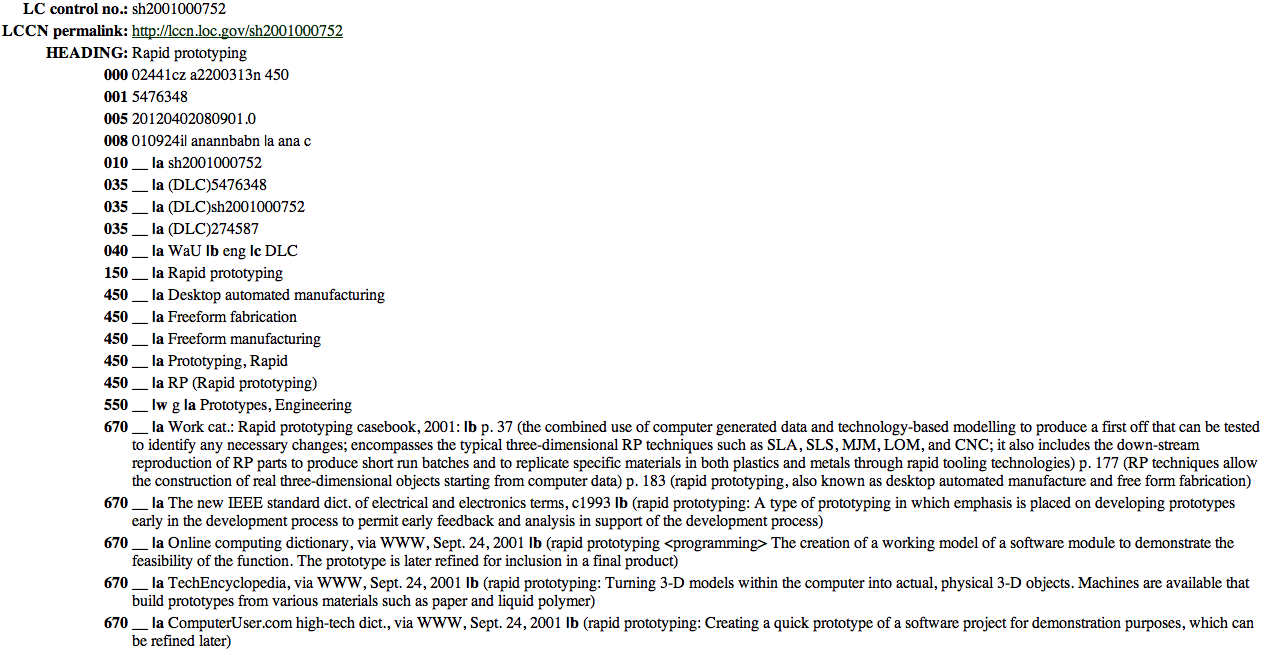
Users will flood the reference desk wanting information on how to make pizza from 3D printers…if they aren’t already! Good news, the subject heading “three-dimensional printing” is authorized and in use. It is a narrower term for “rapid prototyping”:

LC Authorities screenshot


At first this surprised me, being the consumer-minded American that I am. Of course people and companies create prototypes before building the actual, final item that’s for sale. It’s just something that I hadn’t thought too much about before. However, it made perfect sense that 3D printing is a narrower term since the printer rapid makes something that isn’t the actual item.

Parsing out rapid prototyping from 3D printing isn’t too hard, especially with the help of the robust scope notes in their LC authorities records:

LC authorities screen shot

The authority record for 3D printing is just as long:

LC authorities screen shot


Basically, 3D printing focuses on the act of additive creation of an object from a printer, whereas rapid prototyping encompasses the concept and reasons for it, with business and design concerns in mind.

As the DIY, maker movement continues to grow, so will 3D printing. The machines themselves aren’t too expensive, considering, and will only become cheap in years to come. While every home, let alone person, probably won’t have one of their own, there will certainly be publicly available ones or people you can pay to produce you an item from their printer. Libraries are already starting to offer these capabilities, on a small scale–see the end of the post for more information, including my academic librarian friend who has a printer at her university!

LC has more resources on rapid prototyping as of today:

LC catalog screen shot


However, 3D printing books will likely outnumber them soon:

Screen Shot 2013-05-30 at 3.51.23 PM


The books themselves under 3D printing struck me since there was such a variety. Yes, among the five books there was a variety, not vast mind you. I expected to see all five about MakerBot  since that’s the brand that comes to mind for me. Still, the works cover slightly different aspects of 3D printing:

LC catalog screen shot


I love DIY (just check out my Pinterest boards) and making things from scratch, especially food, but I haven’t dabbled in 3D printing yet. I’m sure it wouldn’t be too hard to convince my techie librarian husband that we need a printer to play around with. Truly, it’s all about learning the tech so that we can help the users when all the libraries have one. Right?

After writing this post, I want pizza! Good thing Marco’s Pizza is just down the road…


Want to know even more about 3D printing? This is such a hot, and growing, topic that is being talked about all of the time.

My librarian friend Emily Thompson at SUNY Oswego helps students print research needs, such as a 3D snake skull.

While I haven’t watched this TED talk yet, Lisa Harouni discusses 3D printing.

Mashable will keep you up-to-the-minute with recent news stories in their 3D printing section.

One episode of The New Disruptors podcast discusses the maker movement and 3D printing. I love this podcast, and just recently discovered it!

Search the web and you will come up with tons of information. Check out YouTube for awesome videos, too!


Comments Off on There’s a subject heading for that!?: three-dimensional printing

Posted by on May 30, 2013 in Uncategorized


Tags: , , , , , , ,

LC Error Report Form: Find an Error, Fix it up! All Day Long You’ll Have Great Luck!

A typical day for me consists solely of cataloging ebooks and occasionally a streaming video, or five in a row. Having been a cataloger for almost three years, two of those professionally, I’ve built up my editor’s eye. Wrong MARC fields and coding, misspellings, subject headings that don’t quite fit the item’s topic pop out at me when I look at a MARC record. Part of me prefers completely original cataloging but with too many good records to derive from, one simply cannot ignore the vast cooperative cataloging out there. However, that means taking good with the bad. And there are some very bad records, but many are just slightly bad. This is where errors can sneak into catalogs if the cataloger isn’t paying attention. Hence the “cataloger’s eye” that is crucial to hone and use when deriving any records.

Besides just fixing up my new record, making it accurate and complete, though those are loaded words that get defined by whoever is using them, I report errors to LC via their Error Report Form that serves for catalog and authorities error reporting.

20130522-065847.jpg

It’s so simple to use! Type in the LCCN (LC control number), title, select if the error is in the catalog or authorities and if it is just this record or more, write the issue, and give your name and email. While the “thank you” page after your submit has a stock message of how it takes at least five days, I’ve found that most times they will correct errors within the day, if not a couple of hours. This depends what type of error you report as well as what they have going on. There are certain things, that I’ve found out, that they won’t correct.

First, though, lets cover what LC will correct. My favorite submissions are misspellings. Easy to find, especially if you mistype something, and very easy to fix. I love receiving these emails:

20130522-070558.jpg

Awesome! “Coporation” became “corporation” once more. I used to do these corrections as a undergrad student in tech services at Lawrence University. For me, misspellings in the authorized versions are highest priority when I find one and I always report them. Usually the misspelled name or subject heading wasn’t controlled in OCLC and was the only one in the bunch so they jump out that way. Slightly less obvious are misspellings in titles or subtitles which are crucial to if someone will find it or not. Though sometimes they aren’t truly errors and I don’t know off hand. This record has piano misspelt but is that due to a different spelling in another language?:

20130522-071111.jpg

Probably not so it might be worth reporting. Another type that rarely occurs but drives me nuts is the wrong MARC coding for the 245 in which the title gets clipped because it has been told to skip an article of the wrong length. The one I found last year had no article at all but had been cutting off the first four characters of the first word. LC fixes these immediately as well. So please report any and all errors of these two types to the via their easy form and you’ll hear back soon from Lucas or another on his team.

Not all errors are fixed by LC since they don’t see them as errors due to policy. Bear with me, even though that sounds odd. When the LC classification changes, they don’t redo all of the items to update their classification and call numbers to the new one. Originally I thought this sounded awful. First off, all new works still gets classed by them in the defunct area and show up in OCLC and get perpetuated even though catalogers aren’t supposed to use it anymore. That means we must check and place the items correctly in our local catalogs. But what’s the alternative for them? Re-cataloging and move thousands or hundreds of thousands of book? No. That’s too much. So then the LC classification just needs to be checked and adjusted on the local levels, which is annoying but not that much work and sometimes it’s don’t anyway to cutter it correctly locally. Bottom line, don’t worry about LC classification in their catalog and don’t report it. I’ve received that reply from them as well.

Next time you see an error, please report it to LC and make the LC online catalog a better place for us all!

 
Comments Off on LC Error Report Form: Find an Error, Fix it up! All Day Long You’ll Have Great Luck!

Posted by on May 22, 2013 in Uncategorized


Tags: , , ,

Rolling out RDA today: Keep calm and ask a librarian!

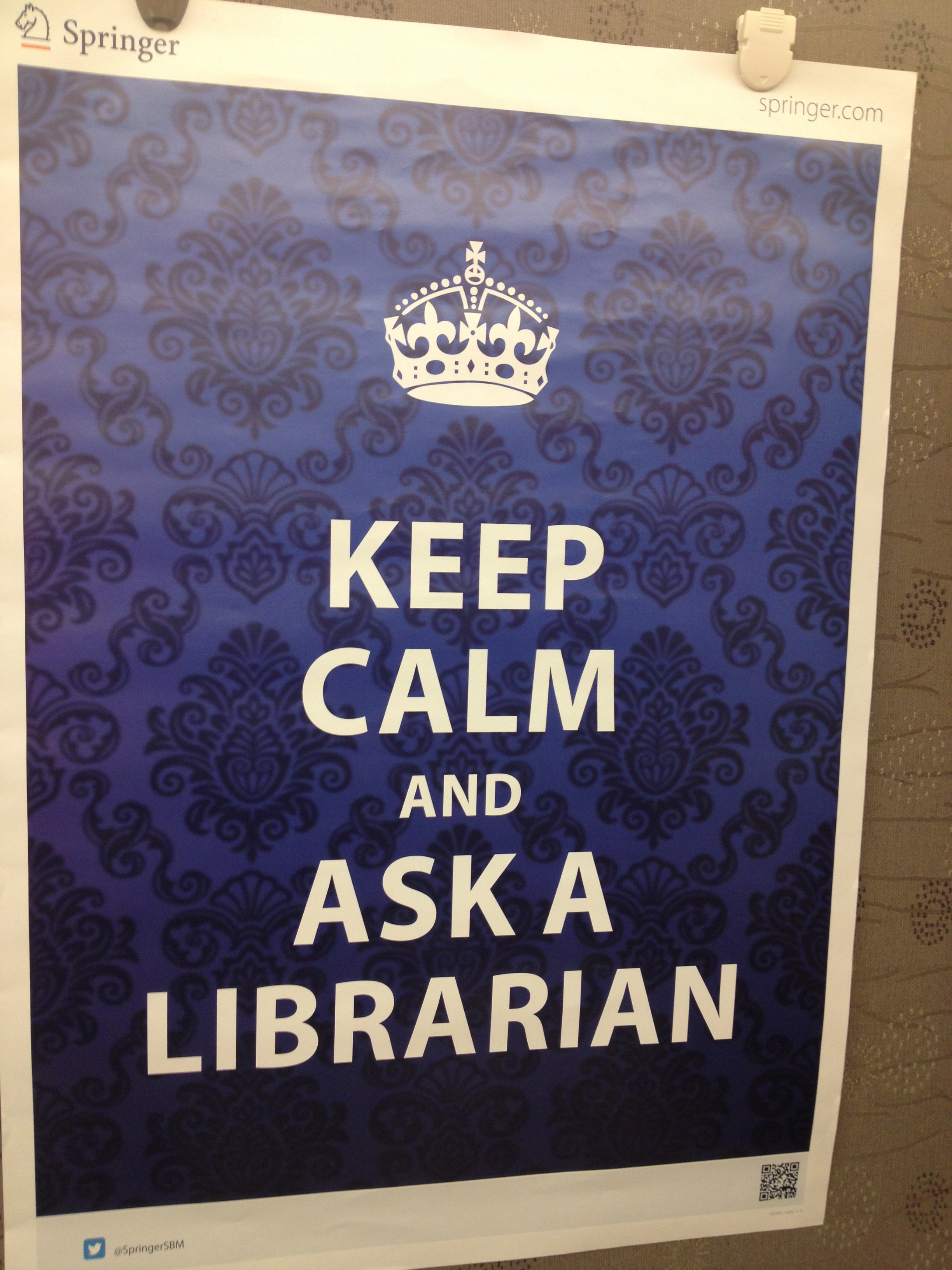
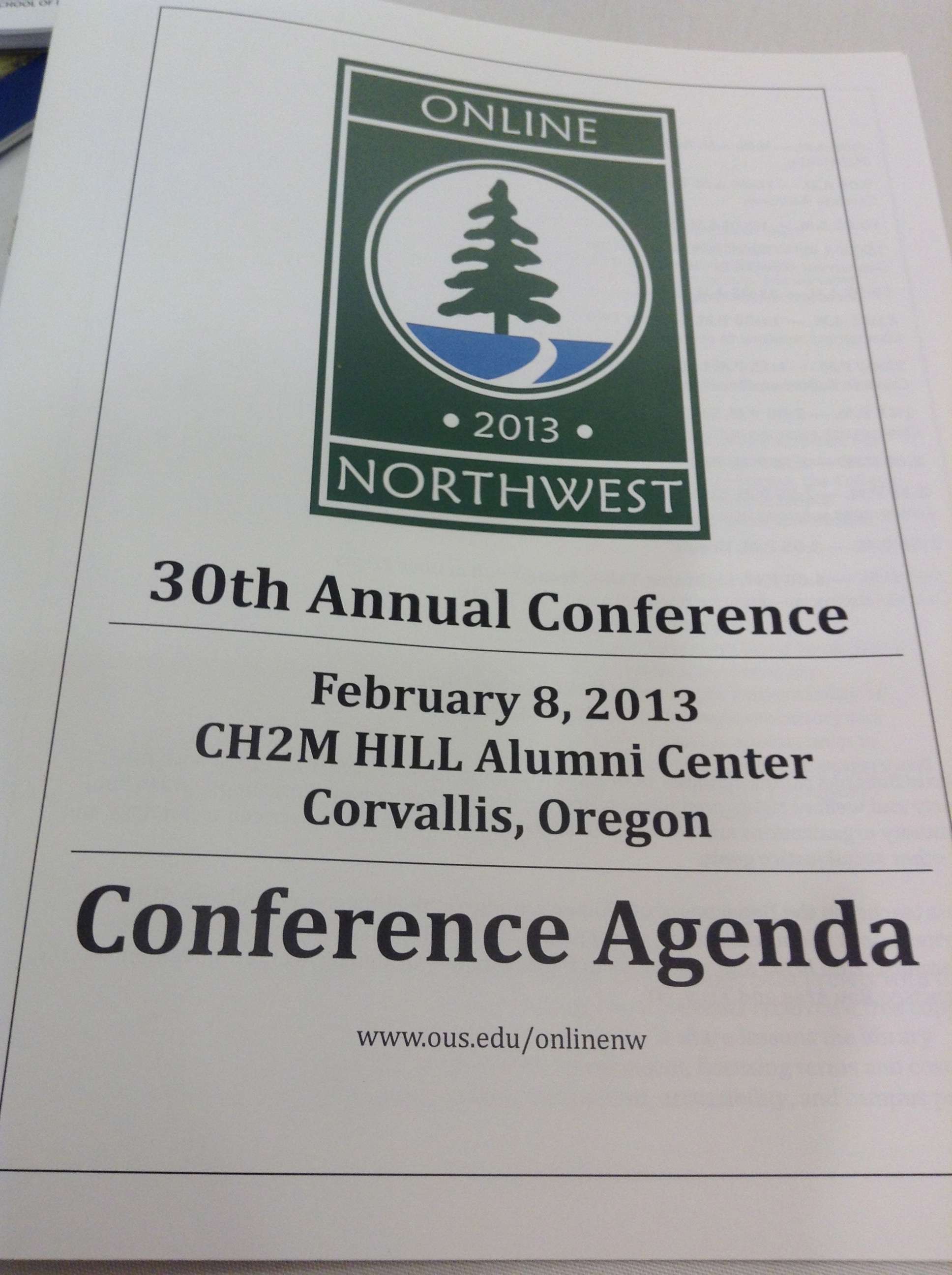
If it’s April 1st, it’s officially RDA cataloging rules day! At least for LC and OCLC, but don’t worry because AACR2 is still allowed and hybrid records can begin and live on for a little while. Users probably won’t notice the switch yet if they are anyone else, including other librarians, freak out just remember to Keep Calm and Ask a Librarian who knows. 😀 This Spring poster is from the awesome Online Northwest Conference at OSU in Corvallis, OR, back in February. Maybe they will have more at annual…I’m just glad I have one. (It’s hanging in my cube behind my computer so this was the best picture I could get for now.)

Springer librarian poster

 
Comments Off on Rolling out RDA today: Keep calm and ask a librarian!

Posted by on April 1, 2013 in Uncategorized


There’s a Subject Heading for That!?: Coenobita clypeatus as pets

I stumbled upon this subject heading while cataloging animal drawing books, which I’ve seen more than I care to count recently. Okay, this exact sub. head. wasn’t used but the pattern was in the record. Thankfully the LC Authority File explains that Coenobita clypeatus (row 87 in the screenshot) is the hermit crab that most stores sell. My sister and I had a few–one to latched onto my palm, though didn’t do any actual damage; that’s about my only memory of those things.

LC Authority File search results (portion!)

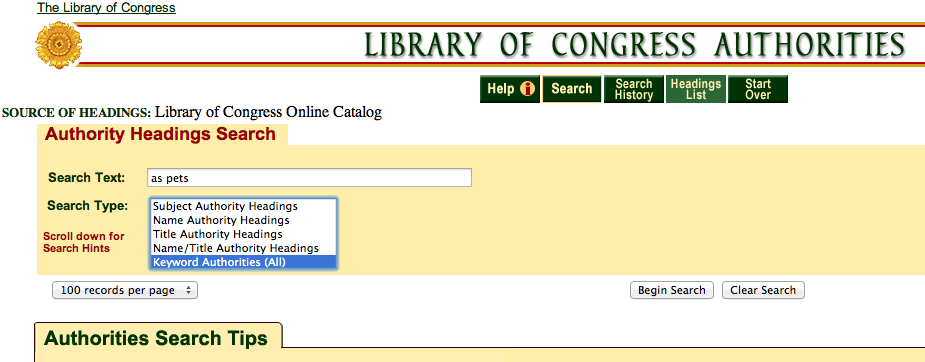
The subject heading pattern, as you can tell, is “_____ as pets”. Sounds straight forward and your mind is probably generating a few as you read this. Here’s the fascinating part…there are currently 454 unique headings, with several variants that aren’t authorized headings. Log on to the LC Authority FIle to see the full range by typing “as pets” in the search box and selecting “Keyword Authorities (All)” before clicking “Begin Search”. This is a new way to search for me that I will keep at the ready for pesky topics in the future!

LC Authority File search box

From African bullfrogs as pets to Worms as pets bookend the rather intriguing list, though they sound like they could be pets compared to others. Preceding worms is Wood lice (Crustaceans) as pets that look eerily similar to cockroaches. Cephalopoda, cheetahs, Grant’s rhinoceros beetles, kinkajous, boas and pythons of various types, all sorts of lizards including the Hydrosaurus, and there’s even a catch-all for insects besides some specific ones with their own headings.

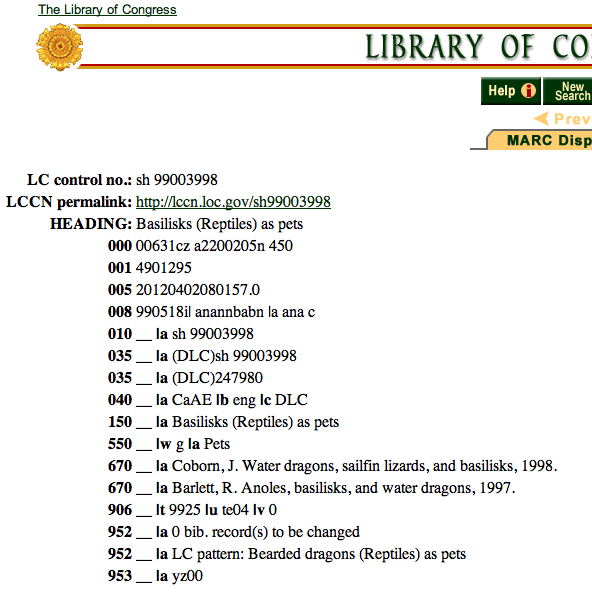
My favorite is Basilisks (Reptiles) as pets since all that I could think of was Harry Potter and the basilisk in the Chamber of Secrets. Seriously, typing in basilisk into Wikipedia brings up the mythological creature by default, and offers up a tiny disambiguation link at the very top of the entry. This showcases another inconsistency within LC subject headings: common names and scientific names are randomly used when setting up a heading rather than preferring one over the other and making a reference to the other in the heading.

LC Authority File Basilisks (reptiles) as pets

Oddly enough, skunks as pets doesn’t shock me because I have looked after a pet skunk, holding it like a kitten as it squirmed to in attempts to escape and run around. Much like ferrets, some of her glands had been removed. Actually very cute, especially since she was still young and thus small.

Now before the kids, or adults, in the library get very excited about all of these new subject headings that you can show them to use, obviously not all are real pets. The easiest example from this list is the classic dinosaurs as pets, made famous by the 1958 book listed in the record.

LC Authority File Dinosaurs as petsI hate to disappoint but sometimes life is like that. That heading is only used in fiction, at least as of 2013. However, can I interest you in a degu?

 
Comments Off on There’s a Subject Heading for That!?: Coenobita clypeatus as pets

Posted by on March 25, 2013 in Uncategorized


Tags: , , , ,

Online Northwest Conference 2013

IMG_0059

Seattle almost four weekends ago and Corvallis/Portland almost two weekends ago! 2013 is already becoming the year of libraries conferences in the Flynn house. Steve presented on screencasts, and there were lots of interesting sessions for me to attended so we both attended Online Northwest this year.

I doubt I’ll ever do conferences so close together again–one weekend at home in between then gone again. It’s a bit more frantic, and number of flights back-to-back than I prefer. But, never say never I suppose.

Online Northwest Conference offers regional librarians from any type of library a small yet robust conference to attend or contribute as a speaker, either a longer session or a lightening talk. Also, a handful of vendors were there as well, including Springer who gave away “Keep calm and ask a librarian” posters! (I’ll take a picture soon of mine and add it here!)

Though only a one-day event, it was jam-packed! The day began with a light breakfast and registration, then keynote followed by three sessions with short breaks in between, lunch, another session then lightening talks. Each session time had four different choices with a good variety of topics. Though no overall theme, one yearly attendee said there is an change of focus each year depending on what is submitted, so watching the program ahead of time lets you know what will be covered. If we lived closer, this would be a fun one to go to regularly, with about 200 people or so attending.

Let me give you a quick run-down of how my day went:

Keynote speaker: Virginia Eubanks, professor of women’s studies, University at Albany SUNY
Eubanks works with women in poverty to foster social justice and empowerment. She focuses on social justice activism in the everyday of the women as well as the movement beginning in the United States, having seen it take over in other countries. Though not a librarian, she struck a cord with her call to action for us as a society to help better people’s lives by meeting them at their needs, interest, and abilities.

Session 1: Accounting for Taste: An eTextbook Experiment – Cheryl Cuillier and 
Jason Dewland, University of Arizona Libraries
Cuillier and Dewland walked through their part in the integration of an etextbook in an economics course. The library, in general, has a hard time finding its place in providing ebooks and access, especially in the classroom. However, these librarians worked to incorporate the etextbook in the course management system in addition to providing reference and research services. They analyzed the use and effectiveness of the etextbook based on the stats at the end of the course.

Session 2: Science is a Moving Target: eScience, Team Science, The Data Deluge and More – Jackie Wirz, Oregon Health & Science Univ.
Amanda Whitmire, Oregon State University
Wirz and Whitmire, PhD students, discussed the science research cycle and how librarians should approach and help scientists in their research at all steps. Basically, the ebb and flow of the whole process is more malleable than most of us realize. Rather than just the typical research places in which librarians usually help out, they argue that data management and even very simple authority control and concepts are valuable offerings that scientist don’t realize we can offer. Also, librarians could help some scientists with finding and writing/preparing grants.

Session 3: Building Oregon: Leveraging Mobile Technologies to Present Digital Collections – Evviva Weinraub and Laurie Bridges, Oregon State University Libraries
Weinraub and Bridges shared their insights in the struggles and setbacks with the creation of a mobile website using the Building Oregon historical photo collection. Though still in the pre-production phase due to funding hold-ups, a previous campus walking tour app they made helps inform their plans for this project. I will definitely watch for the release, and any progress beforehand, of this mobile website.

Session 4 : Ditching Textbooks: The OER Faculty Fellowship at Lane Community College –
Jen Klaudinyi, Lane Community College
Klaudinyi covered online educational resources replacing physical textbooks at her community college. In order to save the students money and encourage the faculty to use open access and electronic resources, the library set up a program to help faculty take their courses completely online. As tangible incentives, the faculty earned iPads when they switched to using OER for their courses.

Lightening talks
These five-minute presentations packed lots of information and ideas into engaging, brief lessons and takeaways.

From 3×5 to LCD: Considerations and How-tos for Conducting Online Card Sort Studies
 – Emily Ford, Portland State University
Ford described how she used the Internet for a card sort activity with part-time, distance students.

Flipping the Distance Classroom 
- Amy Hofer, Portland State University
Hofer offered her suggestions for providing a flipped classroom, by fronting the lessons and homework before lecture, from her experience high school students.

We Ditched our Kindles and You Can, Too!
 – Uta Hussong-Christian, Oregon State University
Hussong-Christian shared the challenges faced and new plan moving forward at their library in using other tablets and apps for check-out to users.

TechShowcase: A Case Study of eReaders on Display – Nate Pedersen, Deschutes Public Library
Pedersen talked about the technology petting zoo on wheels at his library that allows users to test out multiple tablets and ask questions.

All About Word Stemming and Why You Should Care – Caleb Tucker-Raymond, (affiliation not listed)
Tucker-Raymond called attention to stemming in search terms, honing in on something most of us know intuitively, and encouraged more use and teaching of stemming.

Assessing a Library Situation: Using Google Forms Surveys to Assess What People Think, What They Want, What They Know, and What They Think They Know
 – Kim Read, Clark College
Read showed her use of Google Forms to gather and analyze feedback from students before, during, and after instruction sessions.

The Dog & Pony Show (AKA Demonstrating the Value of Your Library)
 – Lorie Vik, Eugene Public Library
Vik described her work in incorporating their public library into the greater community by reaching out to local businesses to help with their research needs by using the library’s resources and librarian’s skills and knowledge.


The hashtag #onc13 was well used throughout the day, if you want to search Twitter and see what’s out there. I re-Tweeted some presentation slides from the last session since the infographics room filled up early! ONC has there own handle as well, @OnlineNW, so follow them and be prepared for next year!

After the conference, we spent the weekend hanging out in Portland, which has a different feel than Seattle but also great. Of course, a couple of hours in Powell’s was a must and I kept myself from bringing home any more than one book. (Phew!)

Perhaps by June I’ll be well-rested to take on ALA Annual in Chicago. Let’s not think that far ahead right now, though. Sadly, it’s very much winter still as Ann Arbor got a dusting of snow today and blustery winds. End of June in Chicago, huh…

 
1 Comment

Posted by on February 19, 2013 in Uncategorized


Tags: , ,

There’s a subject heading for that!?: exquisite corpse (game)

First of all, exquisite corpse (game) is an amazing subject heading in so many ways. It is beautiful, eerie, horrific, bizarre, but most of all intriguing.

I stumbled upon this gem while verifying an author name in the LC catalog. Initially, because of its qualifier “(game)”, a childhood game from playground days called (Light as a Feather) Stiff as a Board popped into my mind. That game is played in the movie The Craft, which is likely where everyone picked it up from. This made me think of other odd games we played, including Sandman (in this article), Bloody Mary, and a phantom limb game–all of which are explained quite well in this Cracked.com article. Takes me back! That’s what we did before computers and cellphones.

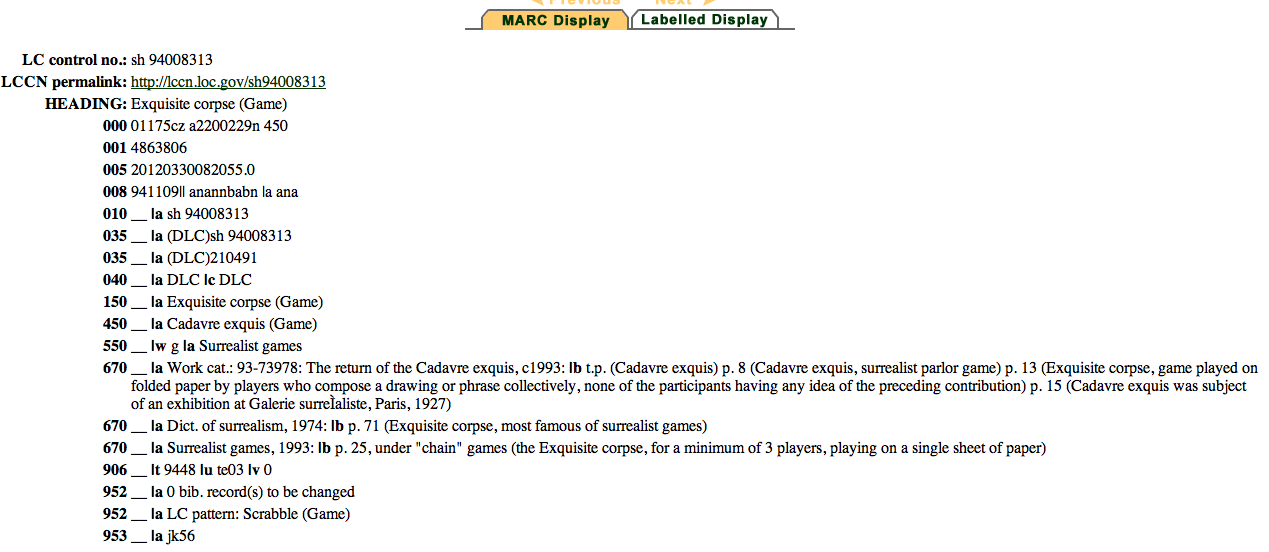
So what is the exquisite corpse (game)? It’s a parlor game that was not scary, believe-it-or-not:

LC Authorities record for exquisite corpse (game)

LC Authorities record for exquisite corpse (game)

As the Authorities scope note explains, this is a written or drawn game in which a single sheet of paper is passed around and everyone contributes a portion without seeing what the previous people did. After reading that, I realized that I had played this game in college with my writers’ group, and a llama played a major role in that shared story we created. The broader sub. head. is surrealist games, which unfortunately has no other narrower terms besides this one, and not much description itself.

Since the game was created and originally played in Paris, cadavre exquis (game) is noted as a 450. Two citations in the Wikipedia page explain the origin of the game’s name: “The exquisite corpse shall drink the new wine” was the first sentence from the game, of course written in French. Now the llama in the story from my game doesn’t seem as silly. In 2012, a film called The Exquisite Corpse Project takes this game into movie making and is a collaboration of five people. I’m interested in seeing it now.

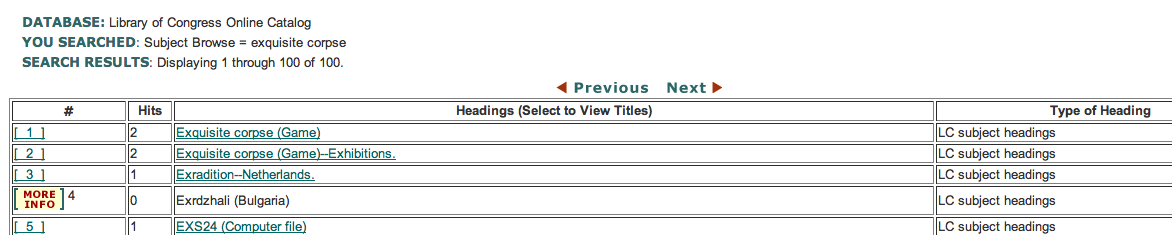
Let’s check the LC Catalog for use figures:

LC Catalog subject browse search for exquisite corpse

LC Catalog subject browse search for exquisite corpse

Quite readily, we see that there isn’t much use nor many derivatives of the sub. head. with delimiters. There are four total hits–two with the plain heading and two with exhibitions tacked on as the descriptor. But this makes sense, since the game has physical products made and could be put up for display. It would be cool to revive this parlor game and then create our own exhibition. Think of what could be written or drawn with all the mobile phones out there! It’s Draw Something plus texting, and then put on display–or not. I bet a lot of NSFW creations would arise, though the Wikipedia article already chose a great drawing to display for that. Someone could have at least included a written example or two as well.

Have you ever played this game, with or without knowing its true name? Any other bizarre kids games that I didn’t mention here already? Want to start the new exquisite corpse craze with me? We could take over Twitter! I’m @ReadWriteLib, if you are wondering.

 
Comments Off on There’s a subject heading for that!?: exquisite corpse (game)

Posted by on February 5, 2013 in Uncategorized


Tags: , , , , , , ,

ALA MidWinter 2013 Movement Monday

Today was about moving forward and ensuring that the future is better and more useful and effective than anything now or in the past. A refinement, if you will.

That said, my day began early with the 8:30 session PVLR (Publisher/Vendor/Library Relations) Interest Group Forum that focused on the topic of enhance ebooks. This is of great interest to me since I catalog ebooks, and have seen a few “enhanced” with links out to other material but that’s it as far as enhanced. Jake Zarnegar from Silverchair Information Systems gave the most comprehensive explanation of the myriad of different types and levels of ebooks, along with the some challenges and benefits. Susie Stroud from Credo Reference demoed their enhanced ebooks, which are more like interactive websites with immediately playable embedded videos and interlinking to other relevant articles and research materials. It’s a great way to think about content and the learners, meeting them where they are and chunking the information up (you’ll see the next tie-in shortly!). Nancy Gibbs from Duke University Library focused on the challenges of faculty by-in and how hard it is to get the library involved. On her campus, different professors created one-off ebooks solely for a class. One professor had the grad students create the content to be bundled at the end as an ebook but then the professor merely deleted it at the end of the semester, finding no future value in it and wanting the next year to do their own, possibly on a different topic. Even for just preservation reasons if nothing else, how can they convince a faculty member to involve the library to save a copy if the professor himself doesn’t value the end result of the students creating an enhanced ebook? It’s tragic but if they create the project on their own and don’t include the library, it’s a huge hurdle to get involved later on in the process, or at the end; this is something to work on. Andrea Twiss-Brooks from the University of Chicago science libraries discussed more of the hurdles with enhanced ebooks, concerning use, pricing, and support. Ebook apps, while a great idea and cool, aren’t sustainable for libraries and check-out or reserve shelf, etc. Questions around ILL, upkeep, cataloging, and acquisitions were also discussed. While it brought up more thinking points than it resolved, this session truly stimulated the room and myself into considering what is out there, what’s to come, and what do we do about it?

My final session of ALA was Taking a New Look at Training and Learning that centered around small group discussion that filtered back into the larger group. People from Web Junction facilitated the event and kept an agenda and plan going to keep us in the time limits. But with all the great ideas and comments, the time literally flew by, with most of us wanting to continue on talking. What do learners need? What motivates people? How do we apply these lessons to training to better serve the learners? Despite not teaching or supervising in my cataloging role, I have taken webinars for software and helped teach my grandparents and parents about the iPad, and my uncle about his Windows laptop. From these experiences, I could relate and project these take aways into future situations to ensure the best learning environment for me or others. I dropped into this session last minute and loved it, learning a lot too. That’s what ALA is great for an can be really fun–stepping outside your usual bounds and seeing what you can learn and apply later. Ideas abound!

Lastly, I walked the exhibit hall one last time. Besides following Steve around on his booth business, I peeled away to explore on my own. One of the best stops was at the LC booth. At the RDA update, Beecher Wiggins discussed the training that they are wrapping up for all of their staff, including overseas. At the Learning session, one lady asked me about assessment tools for those RDA modules online–yes, she was a cataloger too! I didn’t know but thought it a great questions so I headed over to LC to get an answer. No one there could give me one at that point so they put me in touch with a couple of people in their training office, so hopefully in the next week or so I’ll hear back from them. Being able to talk in person can really get the ball rolling, if not work things out.

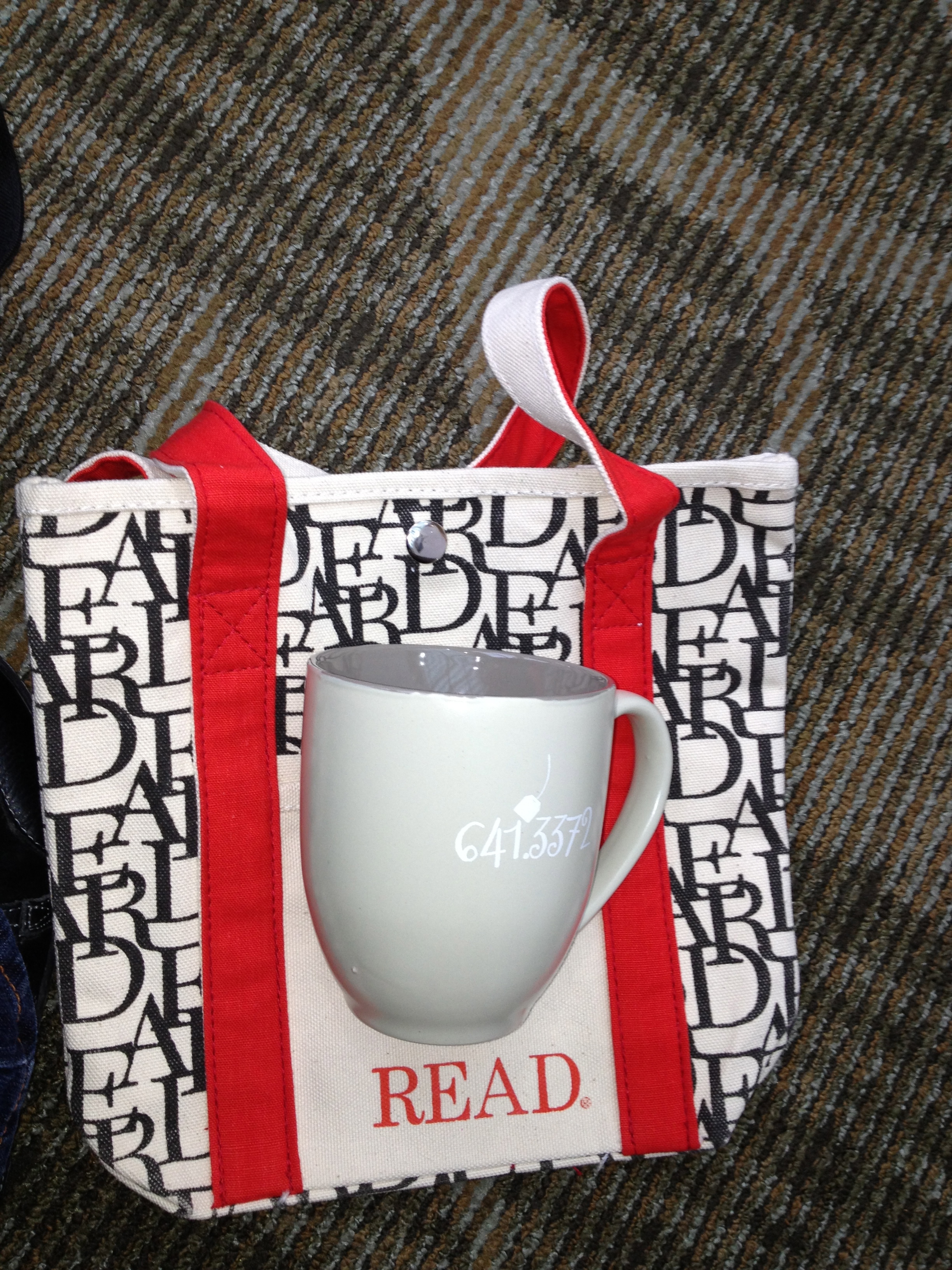
And since I avoided all of the swag, I just couldn’t resist those darn cute mini read tote bags and a call number tea mug!

ALA tote and mug

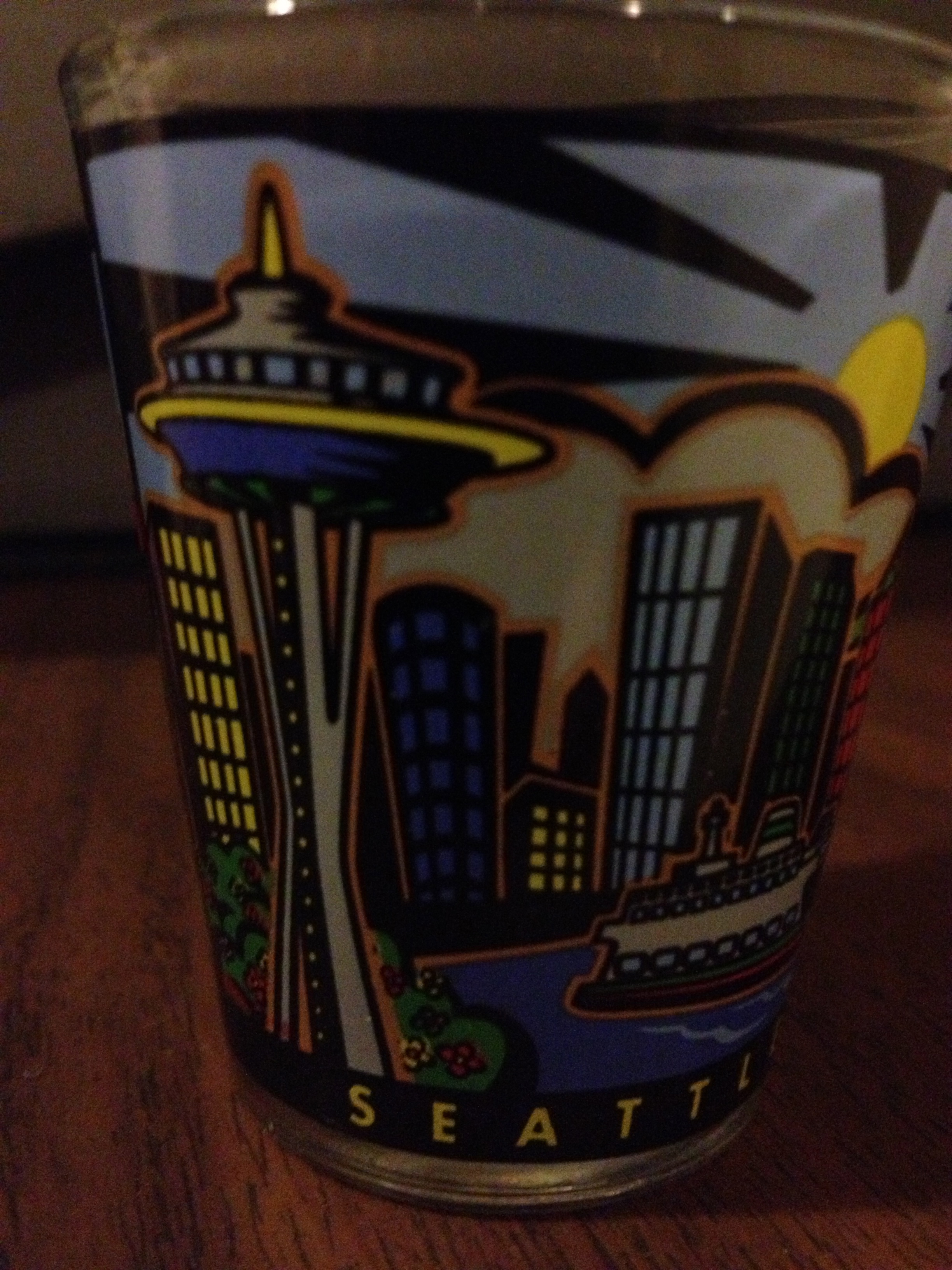
And, of course, our shot glass for each new city that we visit.

Seattle shot glass

 
Comments Off on ALA MidWinter 2013 Movement Monday

Posted by on January 29, 2013 in Uncategorized


Tags: , , , , , , , , ,

ALA MidWinter 2013: Solidarity Saturday

Sitting in Seattle right now, it is still hard to believe that ALA MidWinter is upon us–even having spent the day conferencing all around the city. Though enjoying seafood and 50 degrees, despite some drizzle, is enjoyable!

This is my first MidWinter but it is just as crazy and bustling as Annual, it seems. As co-vice chair for the Cataloging Norms Interest Group, I helped with our panel this morning and it had 60-some people attend. And that’s for MidWinter. It amazes me that thousands of librarians turn out for this mid-year event, though it shouldn’t because it seems to be gaining in size and clout each year.

Today, I attended four sessions, though two were closely related. That is a lot in one day for a conference. Cataloging Norms IG started off my day with two distinct presentations that dovetailed each other nicely. The first speaker, Harold Thiele, gave an in-depth look into the history and beginnings of cataloging, starting with Mesopotamia and Sumer up through RDA. He discussed how title main entry slow progressed and evolved to the form that we know in AACR2 and how with RDA the approach is more with its lack of main entry as we know it. Maura Valentino discussed the 21st century, focusing on metadata beyond that of description and how it affects workflows and process. Though very different, the two talks paired well together and truly gave a complete picture of how far cataloging and metadata have come.

The Catalog Management Interest Group focused on managing catalog workflows, content, metadata, and prepping for RDA field displays. This ended being a more practical session that I first anticipated. Sherab Chen spoke about his new role as an e-resource manager, focusing on personnel tips and his lessons learned so far. He balanced his talk well between a no-nonsence, realistic approach and having an optimistic, can-do attitude despite all of the work and problems that such a job entails. Next, Jessica Hayden covered demand driven acquisitions within an consortial environment. Not having worked in such a setting, I am fascinated by all of the collaboration and discussions that must go on in order for a consortium to function well, and yet there are myriads of benefits to such a arrangement. Also, the distinction of what is done at the consortial level versus local can create either more roadblocks or paved ways, depending on the situation. Sarah Beth Weeks, however, gave my favorite presentation due to her topic of using Google Refine to clean up data in the catalog. For a cataloger, the chance to provide more access and an easier search for the patron to find what they are looking for is the main goal that we all strive to achieve. At their college, rather than amend specific MARC fields to make them all uniform, they added the most common form of a term as a 9xx field for better access. Finally, Roman Panchyshyn closed off the session with his testing of RDA catalog display and how to best make it work for the patron. The 3xx, no surprise, were the oddest and trickiest to work with of the new fields. Since the 264 has a 2nd indicator to help define it, those were easier to display, as were the 502 field labels after a wording tweak. Next month, he will send of his recommendations, basically what he presented at the session, to Innovative in order to get their ILS to display RDA records and fields how they want them, and ensure that they are included in indexing for search results.

After a great lunch break–ALA plans out 1.5 hours over the lunch hour, thank goodness, for no sessions–a back-to-back linked data two part session began. The first hour was informative. Some of it I had heard in Anaheim at Annual but it was a good refresher and parts of it were new information, or said a different way. Eric Miller, president of Zepheria, discussed linked data, tying git in a little bit to Bibframe. Mainly he covered the underlying structure of linked data and why it is an important task to take on as a library community. If all of our libraries were linked data, search engines would include our books and items in the top results pages, allowing users more access especially if they begin their research in the web. Next, Richard Wallis from OCLC talked about all the different projects that they are a part of concerning linked data–mainly VIAF, FAST, Dewey Classification, and now WorldCat linked data. They hope to create a large, more prominent presence on the internet with library data, and are setting an example for member libraries. It is true that if all of the libraries work together, we could make a huge splash in online metadata and set president for all who are part of the web; we have the specialized knowledge and wonderful data, so we just need to make it accessible openly on the web through links that bring users back to the library websites and catalogs.

During the second part of the linked data session, two librarians showed the small-scale projects that they completed using linked data. Both approached the idea differently and created two unrelated yet amazing projects. Violeta Ilik linked her universities math department in Viewshare, allowing for new connections and analysis to be done on the faculty itself, including gender ratios and research areas. One of the coolest part of her data ended being the PhD. location of all the faculty, which displayed on a map. Jeremy Myntti used Viewshare for an entirely different purpose with a whole other type of data. His institution has an online collection of animal sounds recorded in several states. To get even more out of the data, he loaded certain information into Viewshare and was able to display not only a map of locations for the sound recordings but to show pie charts that broke down the kingdoms and genus. The link to the recordings for each animal was included so that a person could click and follow the link to the website with the player on it. Both Violeta and Jeremy said the from start to finish, their projects took no more than 1 hour to create the linked data. Though these were fairly small scale, the implications and ease of linked data are amazing to consider.

What a day! I love attending sessions that sound interesting and I always yearn to learn more while at a conference. That’s why I am here! However, there gets to be an overload point if you pack too much in, especially if you aren’t used to it. Thankfully MidWinter is slightly shorter in the sense that there aren’t as many sessions, so I can conference a bit harder today and tomorrow knowing that Monday will be fairly sparse and Tuesday I fly out before the crack of dawn.

So far it’s been a great conference. Let’s hope tomorrow can live up to today’s standards! We will see that that huge RDA afternoon session brings…

 
Comments Off on ALA MidWinter 2013: Solidarity Saturday

Posted by on January 27, 2013 in Uncategorized


Tags: , , , , , , ,